





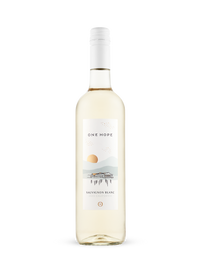
Where should you start with wine? Start with fruity, low-tannin wines: a crisp Sauvignon Blanc, a dry rosé, a soft Pinot Noir or a brut sparkling wine. If dry wines taste sharp to you, try a sweet white such as Moscato. Then taste two wines side by side and let the one you prefer choose your next bottle.
Which wine styles are easiest to start with?
Begin at the light, fruity end and move toward fuller wines as your taste settles. The six styles below cover that route, and each has a ONEHOPE bottle to try it with.
Six easy styles to start with
| Style | Why it is easy to start with | A ONEHOPE bottle to try |
|---|---|---|
| Crisp white | Bright citrus, fresh acidity and almost no tannin | 2023 Vintner Sauvignon Blanc: lime, lemon, guava and star fruit, with a light body |
| Delicate white | Gentle fruit and a light body, with nothing sharp or heavy to get used to | 2023 Vintner Pinot Grigio: ripe stone fruit, light floral notes and citrus zest |
| Dry rosé | Red-fruit flavor with the freshness of a white | 2025 Herstory Rosé: spicy cherry, strawberry, rose petal and crushed raspberry |
| Soft red | Red fruit with gentle tannin, so the drying feel stays light | 2021 Hospitality Pinot Noir: ripe strawberry, Bing cherry, a touch of cinnamon and a silky finish |
| Red blend | Ripe fruit and a smooth texture, a step toward fuller reds | 2022 Vintner Red Blend: cherry, raspberry, cocoa powder and vanilla |
| Dry sparkling | Bubbles and brisk acidity that suit salty, crunchy food | Vintner Sparkling Brut, a California sparkling wine: green apple, pear, pineapple and citrus, with a creamy finish |
If dry wines still taste tart, add one sweet white. The 2021 Vintner Moscato brings nectarine, orange blossom and citrus zest, with a medium body that keeps the fruit lively.
Find more bottles to compare in our wine collection. ONEHOPE wine gives back.
What three questions help you find your style?
Most of what you like or dislike in a glass comes down to three things. Ask them of every wine you taste.
- Do you like tart fruit or ripe fruit? Tart, zesty wines taste of lemon and green apple. Riper wines taste of peach, tropical fruit or jammy berries. Our guide to types of white wine shows the range from crisp to round.
- Do you like a drying feel? That grip on your gums after a red is tannin. If it bothers you, stay with Pinot Noir for a while. Read what tannins are to learn where the feel comes from.
- Do you prefer dry or sweet? Fruity is not the same as sweet, and many fruity wines are dry. Our dry vs sweet wine chart shows where common wines sit.
How do you taste two wines side by side?
Comparison teaches faster than a single glass. Open two wines that differ in one way: the Sauvignon Blanc and the Pinot Grigio, say, or the Pinot Noir and the Red Blend. Pour a small taste of each into separate glasses.
Look, swirl, smell and sip each one in turn. Our guide to hosting a wine tasting at home walks through those steps and the tasting words in plain English. For more words, see our wine glossary.
Your nose does much of the work. Pinch it while you sip, and most of the flavor fades. Let go, and it comes back.
Then write a three-line note for each wine:
- What did it smell like?
- How did it feel: crisp or round, light or heavy, smooth or drying?
- Would you buy it again, and with what food?
After a few pairs, a pattern appears. That pattern is your taste, and it tells you which bottle to open next.
How do you read a wine label and choose a bottle?
Look for four things on a wine label.
- Grape. The grape name, such as Pinot Noir or Sauvignon Blanc, is the quickest clue to style. A blend combines several grapes.
- Place. The region names where the grapes grew. A broad name like California covers many vineyards; a narrower one points to a single area.
- Vintage. The year of the harvest. Each growing season is a little different, so the same wine can taste a little different from one year to the next.
- Sweetness. Most still wine labels say nothing about sweetness, so read the tasting notes; words such as off-dry or late harvest signal some sweetness. On sparkling wine, brut means dry and extra dry is a touch sweeter. Our guide to reading a sparkling wine label explains the full scale.
When you shop, start from the style you liked last, then change one thing. Try the same grape from a different place, or a neighboring style one step fuller. Ask questions wherever you buy, and say what you liked about the last bottle.
How should you serve wine as a beginner?
Three habits make any bottle taste the way it should.
- Temperature. Chill whites, rosé and sparkling wine, and give most reds a short time in the fridge. See our wine serving temperature guide for each style.
- Glass. Any clear glass with a bowl works. A wider bowl lets you swirl and smell, which helps you learn. See how to hold a wine glass.
- Leftovers. Recork an open bottle and keep it in the fridge. Our guide to how long wine lasts after opening gives the days for each style.
Where should you go next?
Once you know the styles you like, go deeper one category at a time.
- Reds from light to bold: types of red wine, from Pinot Noir to Cabernet
- A fuller white: our Chardonnay guide, including oaked and unoaked styles
- A bold red with firm tannin: our Cabernet Sauvignon guide
- Pink wine explained: what rosé wine is and how winemakers make it
- Bubbles: our sparkling wine guide
- Wine with dinner: the food and wine pairing chart
Frequently asked questions
What wine is easiest to start with?
Fruity wines with little tannin are the easiest place to begin. Good examples are a crisp Sauvignon Blanc, a dry rosé, a soft Pinot Noir or a brut sparkling wine. If those taste sharp, try a sweet white such as Moscato.
Is red or white wine better for beginners?
Neither is better. Many people find whites and rosé easier at the start, because they have little or no drying tannin. If you prefer red, begin with Pinot Noir, which has softer tannin than Cabernet Sauvignon. For how the two are made, see red wine vs white wine.
What is a sweet wine for beginners?
Moscato is a common choice. It smells of fruit and flowers and tastes clearly sweet. Our 2021 Vintner Moscato shows nectarine, orange blossom and citrus zest. Serve it well chilled.
How do I learn what wine I like?
Taste two wines side by side, take a short note on each, and keep the one you prefer as your guide. Change one thing at a time: the grape, the place or the sweetness.
Do I need special glasses to start?
No. Any clear glass with a bowl lets you see, swirl and smell the wine. Stemmed glasses keep your hand off the bowl, which helps a chilled wine stay cool.
What does dry mean on a wine?
Dry means the wine tastes of little or no sweetness. Yeast turned almost all the grape sugar into alcohol. A dry wine can still smell of ripe fruit.

