





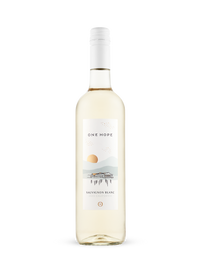
Serve sparkling wine coldest, at about 40 to 50°F, with crisp whites and rosé close behind. Fuller whites and lighter reds belong in the 50s. And yes, red wine should be chilled a little: fuller reds taste their best at about 60 to 65°F, just below room temperature. From room temperature, a white, rosé or sparkling wine needs two to three hours in the fridge. An ice and water bucket does it in 20 to 30 minutes. A fuller red needs only 15 to 20 minutes in the fridge.
What temperature should each wine be served at?
Use this chart as a starting point. The times assume a bottle starting at room temperature, or straight from the fridge for the fuller white.
| Style | Serve at | Time in or out of the fridge | ONEHOPE bottle |
|---|---|---|---|
| Sparkling wine | 40–50°F (4–10°C) | A few hours in the fridge; pour it straight from there | Vintner Sparkling Brut |
| Crisp white and rosé | 45–50°F (7–10°C) | Two to three hours in the fridge | 2023 Vintner Sauvignon Blanc; 2025 Herstory Rosé |
| Fuller white | 50–55°F (10–13°C) | Out of the fridge about 15 minutes before pouring | 2023 Vintner Chardonnay |
| Lighter red | 55–60°F (13–16°C) | About 30 minutes in the fridge | 2021 Hospitality Pinot Noir |
| Fuller red | 60–65°F (16–18°C) | 15 to 20 minutes in the fridge | 2023 Vintner Cabernet Sauvignon |
| Sweet red dessert wine | 55–60°F (13–16°C) | About 30 minutes in the fridge | Reserve Dessert Wine |
The right temperature lets each wine show its character:
- Vintner Sparkling Brut: green apple, pear and tropical aromas stay fresh and lively when the bottle is well chilled.
- 2023 Vintner Sauvignon Blanc: lime, lemon, guava and star fruit taste bright and crisp at the colder end.
- 2025 Herstory Rosé: spicy cherry, strawberry and rose petal come through clearly when the wine is cool, not icy.
- 2023 Vintner Chardonnay: a few degrees warmer lets its green apple, bright citrus and vanilla open up.
- 2021 Hospitality Pinot Noir: a light chill keeps its ripe strawberry, Bing cherry and touch of cinnamon vivid.
- 2023 Vintner Cabernet Sauvignon: dark berries, toffee and hints of vanilla show best just below room temperature.
- Reserve Dessert Wine: slightly cool, its toffee, dark plum and sweet cherry taste rich rather than heavy.
For opening and pouring a bottle of bubbly, see our guide to reading a sparkling wine label.
Should red wine be chilled?
Yes, a little. Most homes run warmer than the cool rooms behind the old "room temperature" rule. A red served too warm tastes flat, and the alcohol starts to stand out over the fruit.
Too cold has its own cost: it mutes the fruit and makes tannin feel harsher. Aim for the middle.
Lighter reds take a little more chill than full ones. Not sure where yours sits? See our guide to types of red wine, light to bold. Pinot Noir at 55 to 60°F tastes fresh and juicy. A Cabernet Sauvignon or red blend sits happier at 60 to 65°F. Our red blend guide explains why winemakers blend and what each grape brings to the glass.
How do you chill wine quickly?
- Use an ice and water bucket. Fill a bucket with ice, add cold water and sink the bottle up to its neck. It chills in about 20 to 30 minutes.
- Add water, not just ice. Water touches the whole bottle. Ice alone leaves air gaps and works more slowly.
- Skip the freezer. A forgotten bottle can burst.
- Keep ice out of the glass. It waters the wine down as it melts.
How do you warm up a bottle that is too cold?
Leave it on the counter for 10 to 15 minutes. Once poured, cup the bowl of the glass in your hands for a minute. The wine also warms in the glass as you drink it, so slightly cold is easier to fix than too warm.
What is the difference between red and white wine glasses?
A red wine glass has a wider bowl that gives a fuller red room to breathe. A white wine glass is narrower, which keeps the wine cool and gathers its fresh aromas. You do not need a different glass for every wine. One all-purpose glass, with a medium bowl that narrows toward the rim, works for every style, sparkling included. The shapes below are a nice touch, not a requirement.
The four main types of wine glasses:
- Red wine glass: a wider bowl gives room to swirl, and air helps the aromas of a fuller red open up.
- White wine glass: a narrower bowl keeps the wine cool for longer and gathers fresh, fruity aromas toward your nose. Rosé suits it too.
- Flute or tulip: a flute keeps a steady stream of bubbles. A tulip or white wine glass gives fruity sparkling styles more room for aroma.
- Small dessert wine glass: a sweet wine is rich, so a small glass suits slow sipping.
Whatever the shape, choose clear, plain glass so you can see the color. Hold a stemmed glass by the stem, so your hand does not warm the wine. Stemless glasses work well; just hold them near the base. Fill only to the widest part of the bowl, which leaves room to swirl. For pour sizes, see how many glasses are in a bottle.
Hosting friends? At a home tasting, one clear glass each covers the whole flight. Our guide to hosting a wine tasting at home shows how to set the table.
When should you decant wine?
Decanting means pouring wine from the bottle into another vessel before serving. It helps in two cases.
- Young, firm reds. Air softens tannin and opens up the aromas. Give a young Cabernet Sauvignon or red blend 30 minutes to an hour.
- Older reds with sediment. Stand the bottle upright for a day, then pour slowly. Stop when the sediment reaches the neck, and serve fairly soon. A light under the neck helps you see it coming.
You do not need a decanter. A clean glass jug works just as well, or pour and let the wine rest in the glass for a few minutes. Most whites, rosé and sparkling wine need no decanting at all, and lighter reds like Pinot Noir need little. Leftover wine? See how long wine lasts after opening.
Decanting vs aerating
An aerator pulls air into the wine as you pour, a quick shortcut for a young red when there is no time to wait. A decanter gives the wine a wide surface and longer to open. That suits a bold, densely structured red such as our 2024 Reserve Paso Robles Cabernet Sauvignon. An aerator sends sediment straight into the glass, so an older red still needs a slow pour into a decanter or jug.
Choose a bottle, then chill it
Pick a bottle for dinner with our food and wine pairing chart, then chill it by the chart above. Browse our white wine collection and red wine collection. ONEHOPE Wine also gives back.
Frequently asked questions
What temperature should red wine be served at?
Fuller reds such as Cabernet Sauvignon taste best at about 60 to 65°F (16 to 18°C). Lighter reds such as Pinot Noir suit 55 to 60°F (13 to 16°C). From a warm room, 15 to 20 minutes in the fridge brings a fuller red down.
What temperature should white wine be served at?
Crisp whites such as Sauvignon Blanc suit about 45 to 50°F (7 to 10°C). Fuller whites such as Chardonnay show more flavor a little warmer, at 50 to 55°F (10 to 13°C). Our white wine guide explains which styles are crisp and which are fuller.
Should you chill rosé?
Yes. Serve rosé like a crisp white, at about 45 to 50°F (7 to 10°C). Two to three hours in the fridge does it, or 20 to 30 minutes in an ice and water bucket. Learn more in what is rosé wine.
How long should you chill white wine in the fridge?
About two to three hours from room temperature. Take a fuller white such as Chardonnay out about 15 minutes before pouring, so its flavors can open up.
Do you need different glasses for red and white wine?
No. One all-purpose glass works for every style, sparkling included. A wider bowl for reds and a narrower one for whites are a nice touch, and flutes are optional.
How long should red wine breathe?
Give a young, firm red 30 minutes to an hour in a decanter or in the glass. Lighter reds need little or no time. Older reds need little air, but decanting them leaves any sediment behind in the bottle. Taste as you go; the wine tells you when it has opened up.
What is the difference between decanting and aerating?
Decanting pours the wine into a wide vessel, where it takes in air slowly over time. Aerating pulls air into the wine as you pour, a quicker way to open up a young red. Simply pulling the cork does little, because only the narrow neck of the bottle meets the air.

